



A complete research project
A question you chose, a design you can defend, and results you understand end to end.
Scorial teaches you the skills to do computational biology research yourself. Then you bring a question you actually want to answer, learn the reasoning as you work through the research, and leave with a manuscript you wrote.
Early access · Join Scorial now
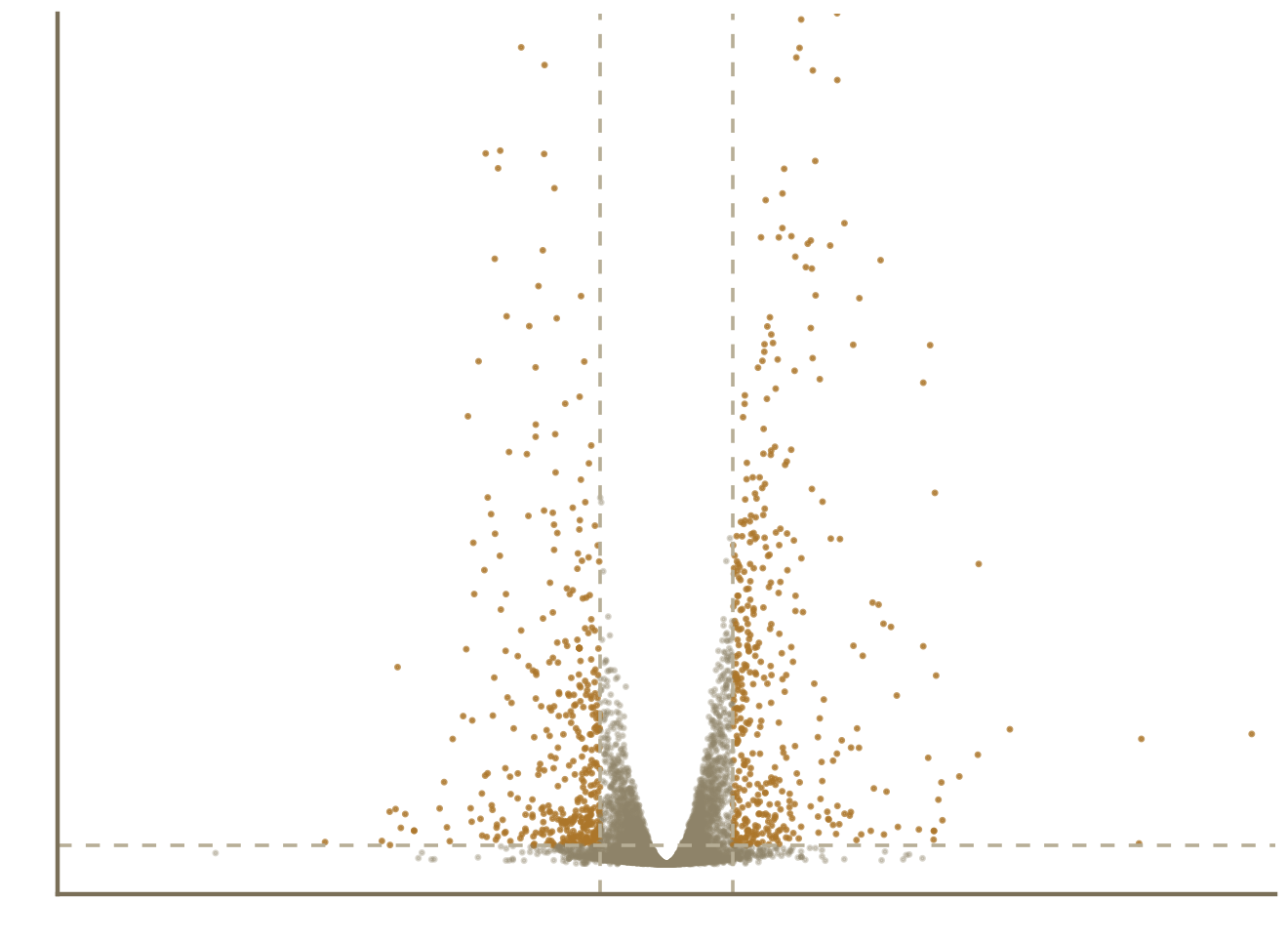 log2 fold change
A short slice of a coaching session.
Nine stages, the arc every research project actually follows, taught through lessons and labs. Alongside the nine you learn skills of their own: how to read a scientific paper, research ethics and integrity, and statistical literacy. This is where you learn the entire research process, before you begin a research project of your own.
Every stage sits in one of four strands.
KnowledgeYou learn your field and find where its open questions are.
Applicationyou write the Python yourself, checked against a real computed result.
ThinkingYou work out what a result means and which method the question called for.
CommunicationYou write up what you did so another researcher can follow it.
Learn to turn a vague curiosity into one specific, testable question.
Learn what's already known, read it critically, and place your research question where the field needs it most.
Track down a real public dataset and pull it into a table you can actually work with.
Handle the mess real data arrives in: missing values, mismatched labels, and the quality control that decides what you can trust.
Look before you leap: summaries and first plots that tell you what you're actually holding.
Learn to analyze the data with the method your question actually calls for.
Learn what the numbers mean and, just as important, what they don't, and what that means for your research.
Build the figures that carry the finding, a volcano plot and a PCA, so a reader sees it at a glance.
Learn how to write a full scientific manuscript: abstract, introduction, methods, results, discussion, citing your sources properly, and stating the limits of what you found.
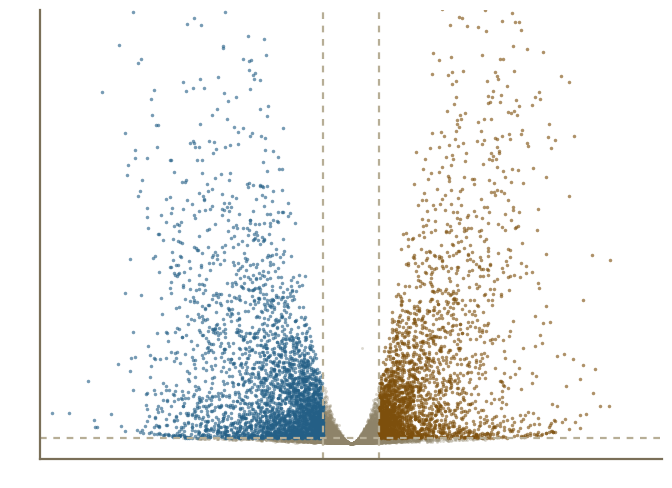
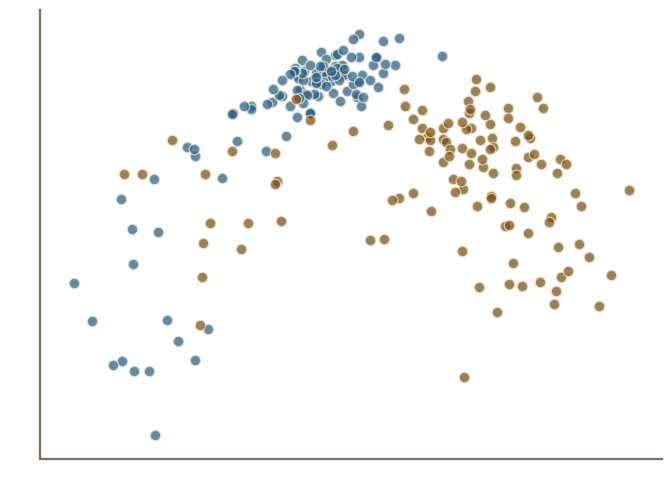
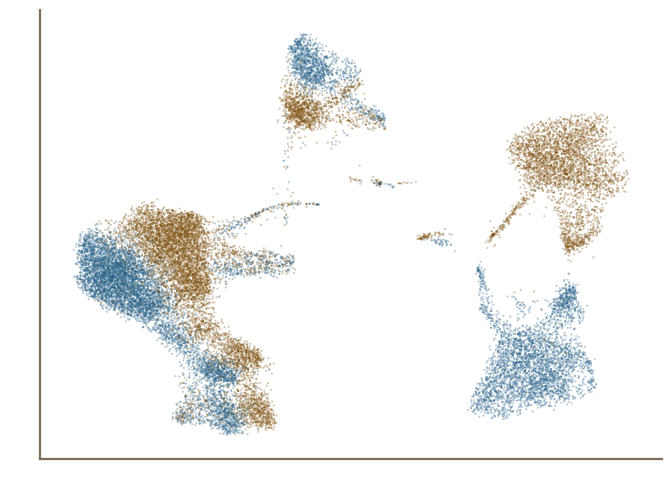
Using the nine stages, you apply what you learned to the question you’re interested in. Every one of the nine is worked on your question, start to finish. Scorial guides you, questions your decisions, and reviews your work like a real research mentor.
Scorial is built on the Socratic method. It questions your work the way a good teacher does, and it will never do that work for you. That is deliberate. The point is for you to learn the real foundations of computational biology research, so the paper is yours: you did the work yourself, you’re proud of it, and you can defend every line of it to anyone who asks.
Guides
Points you at what your research needs next.
Questions
Pushes on every call (your comparison, your method, your threshold) until you can stand behind it.
Reviews
Reads your draft like a research mentor would, and hands it back for you to fix.
Your Research Interest
steroids and gene expression
Your Research Question
which genes change in airway smooth muscle after dexamethasone, versus untreated controls
Literature Review
what is already known
Data
find it, clean it, explore it
Analysis
the method, and what it means
Visualize
the figures that carry the finding
Write It Up
methods, results, discussion, limits
Your Paper
you wrote every word of it
The same nine stages, on your own research question
What you leave with
A question you chose, a design you can defend, and results you understand end to end.
A full paper in your own words: abstract, introduction, methods, results, discussion, citations, and an honest account of the limits.
The method itself, not just one finished research project. The next question is one you can take on yourself, and when you work in a real lab, you already know how.
What you leave with is a manuscript draft you authored: a real first draft of real research, in your own words. It is not a publication, not peer review, not acceptance, and Scorial never pretends otherwise: what happens to your work out in the world is not ours to predict. What’s certain is the work itself. You did every part of it, and you can defend every line. The work is yours, and so is the credit.
Straight answers to the questions beginners actually ask.
The skills first: how to ask a research question, read the literature, find and clean real data, run an analysis, and write it up. Then, if you have a research question you’re interested in, you can work through it with Scorial and come away with a manuscript draft.
That’s completely fine. Most people don’t, and Part One doesn’t need one. You learn the skills first, and seeing how computational biology research actually works is what tends to give people a clearer idea of what they want to work on. The skills are worth having either way. When you are ready with a research question, you can bring it to Scorial and begin the research.
No. Scorial meets you at your skill level and builds you up from there. If you’ve never opened a terminal or written a line of Python, that’s fine. You’ll learn that too, one step at a time, as part of the work.
Pretty much anyone. Computational biology research teaches you to reason from evidence, and that carries into research and into the rest of your life. High-school and college students who want to get into the field can learn it here, without needing a lab or a PhD advisor to hand-hold them. Ambitious beginners welcome.
You leave with a manuscript draft you wrote every word of: abstract, introduction, methods, results, discussion and citations, on research you actually did. Scorial helps you get the hard part right: a sound analysis you can defend. What you do with it next, and how the world receives it, is yours. We can’t make any promises.
The whole research process: read the literature, find and vet a public dataset, set up a comparison you can defend, analyze the data, interpret what came back, and write the manuscript. These are the same things a first-year lab student learns.
It’s using data and code to answer biology questions, like figuring out which genes switch on when a cell is treated with a drug. It’s one of the most in-demand skills in modern science, and you can start learning it now, with no wet lab required.
Yes. You work on public datasets with real methods, and your results are checked against the real computed result rather than a guess. Nothing here is a simulation.
Scorial is in early access. Join the waitlist and we’ll reach out as spots open. We’re building it for students, and we’ll share the details on access as we get closer.
Scorial is in early access. Learn the skills of computational biology research, then take a question of your own from a first idea to a manuscript. Join the waitlist and we’ll reach out as spots open.